
Digitising a 30% of
revenue savings scheme, end to end
0→1 PRODUCT DESIGN · CASE STUDY
From paper passbooks and Excel sheets to a full
omni-channel platform serving 9,264 users in 6months.

Harish Vithan
Lead Product Designer
Mobile App - Web platform
12+ Months
6 Members team
Impact at a Glance
7×
Digital payment growth
30–50 → 300–350 monthly payments
−87%
Support ticket reduction
Passbook transparency eliminated the core anxiety
38,264
App downloads
+20%
Referral growth
−60%
Staff follow-up
<2min
Sync resolution
At 300–350 payments/month across multiple scheme tiers, the system now supports approximately ₹7Cr+ in monthly digital collections.
Overview
ORRA Fine Jewellery is one of India's most recognised premium diamond brands, operating 100+ stores. Running two savings schemes IIS and GIS where customers pay fixed monthly instalments over 10 months and redeem a benefit top-up in-store on month 11. Contribute roughly 30% of total revenue
The Problem
A ₹7Cr monthly business running on
paper and trust
Customers had no reliable digital way to manage their schemes end to end. They had to remember monthly payments manually, rely on physical passbooks, visit stores or coordinate with staff for updates, and had limited visibility into payment history, benefits, and maturity status.
At the same time, store teams were maintaining fragmented operational workflows. They relied on multiple reports, manual reminders, and backend escalations even for relatively simple issues, which increased support overhead and made the overall experience feel less trustworthy.
Three personas.
Three very different frustrations.

Priya, 34
Loyal ORRA customer. Enrolled in 2 schemes. Busy professional.
Hard to remember due dates and payment amounts.
No single place to track scheme details and benefits.
Lost passbook meant depending on store staff.
Every payment required store or staff support.
Rajan, 42
Store Manager at ORRA
Anita, 38
Regional Business Manager

How Might We
How might we design a digital-first scheme management experience that removes the friction of manual, paper-based processes, reduces operational burden for staff, improves on-time payment completion, and creates an engagement layer that drives retention and revenue?
RESEARCH and Insights
Four insights that shaped the product
01
Payments depended on reminders
Customers didn’t forget payments — the system failed to remind them.
→ Payment behaviour was dependent on staff, not the product.
02
Operations were manual at scale
~60% of staff time went into repetitive follow-ups and tracking.
→ Core workflows that should have been automated were handled manually.
03
Excel replaced the CRM
Staff relied on spreadsheets to run daily operations.
→ Official systems didn’t support real workflows, creating duplicated data.
04
Customers had zero visibility
All scheme data existed, but was not accessible to customers.
→ Trust depended entirely on staff and physical passbooks.
I conducted field research across stores, customers, and staff workflows to understand how the system actually operated beyond the interface.
This revealed where system limitations led to manual workarounds, where trust broke, and where product intervention was most critical.
Store visits
Customer interviews
Stakeholder interviews
Ticket analysis
Usability testing
Strategic
Phased Approach
Early in discovery, it became clear that the operational foundation needed to be solid before layering engagement features on top
Phase 2
2 Months Timeline
Retain and grow
Group Payments
Refer & Earn
Rewarding
Redemption
Online Tambola
Phase 1
2-3 Months Timeline
Stabilise and build confidence
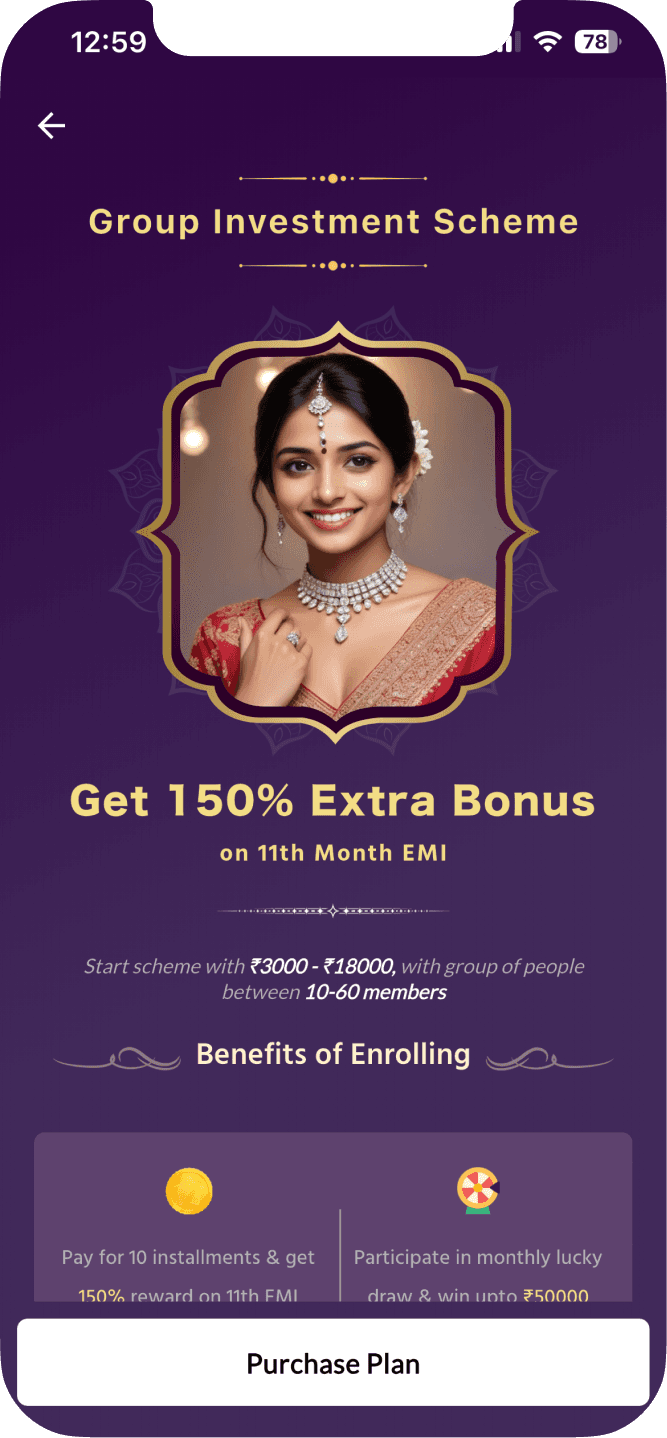
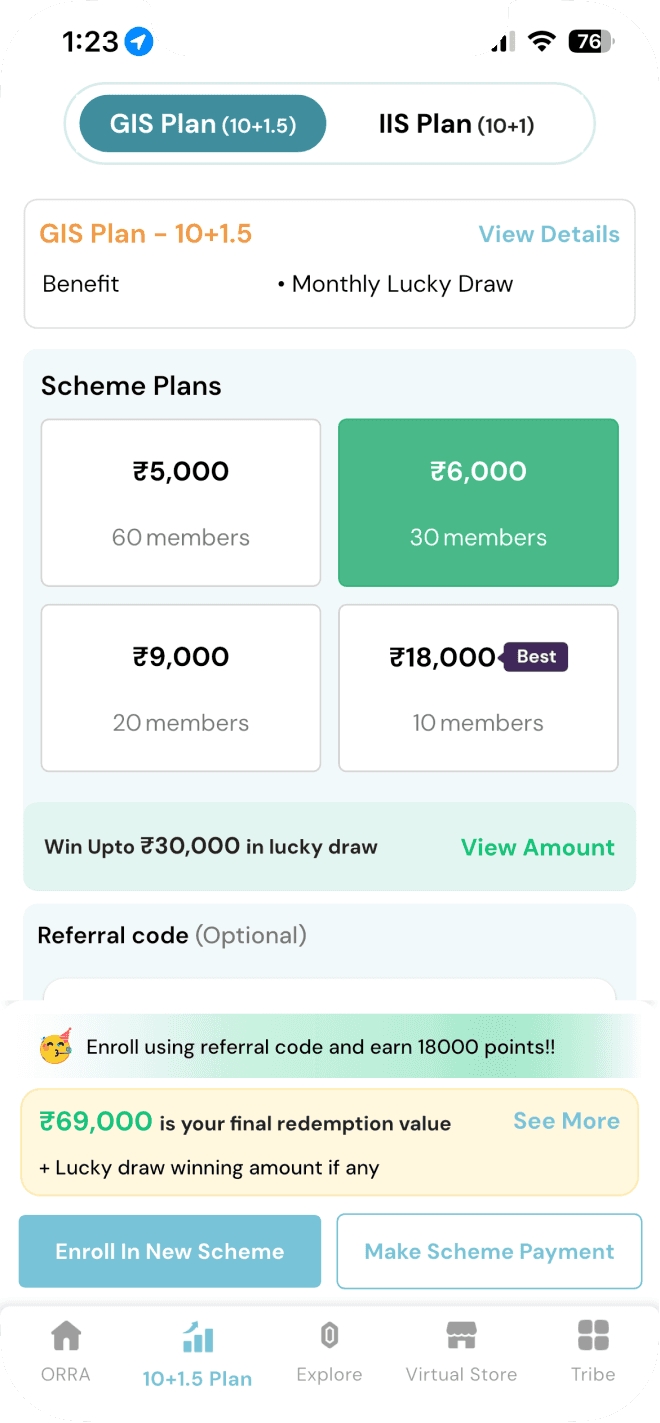
Scheme discovery
Digital passbook
Payment reminders
In-app payments
Staff dashboard
Goal is not just digitising schemes. To design a system that supports consistent financial behaviour at scale for customers and for ORRA's internal teams.

Phase 1
Stabilise and build confidence
Early in discovery, it became clear that ORRA did not need more engagement surfaces first it needed a stronger operational and trust foundation
Browse available plans in one place.
Compare benefits and terms clearly.
Complete enrolment in 5 guided steps.
Customers could compare schemes, understand benefits, and enrol in-app without depending entirely on store staff.
Scheme discovery
Make informed decisions independently
61% → 94% task completion
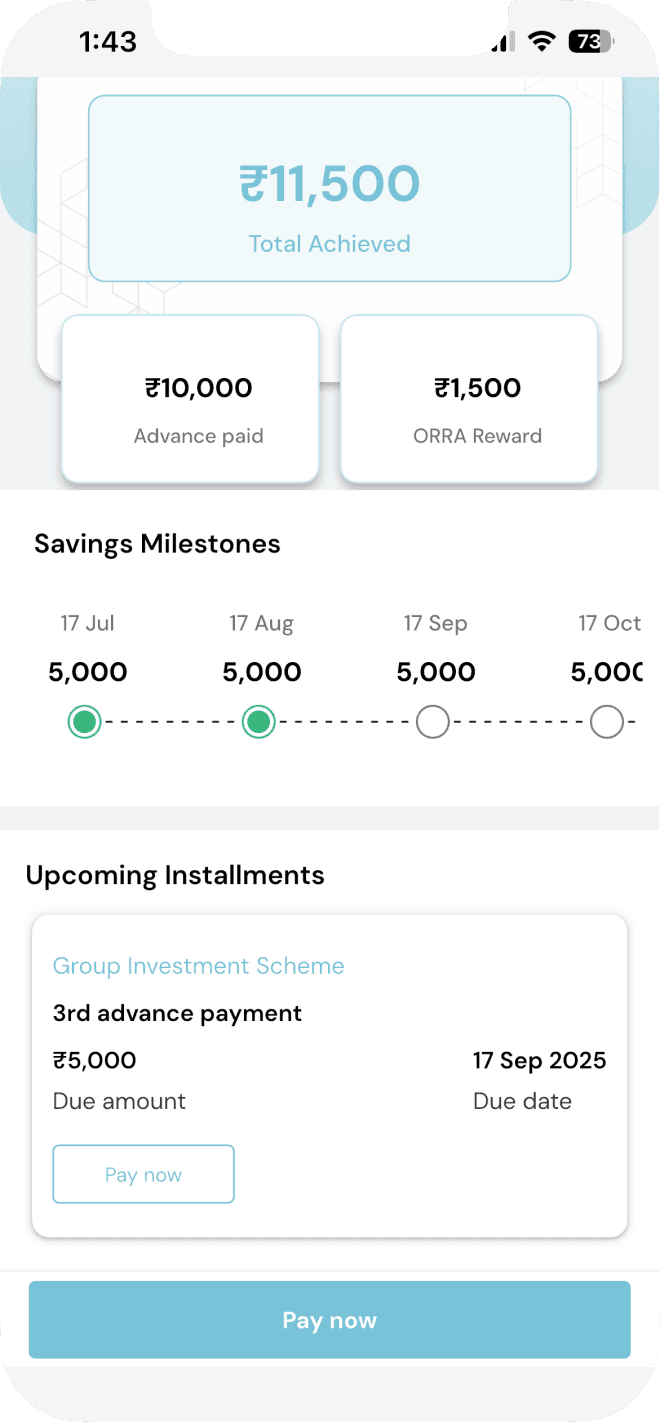
View active scheme details anytime.
Track payment history and due status.
Check benefits and maturity progress.
The digital passbook replaced fragile paper records with a clear, trusted view of scheme status, payments, and benefits.
Digital Passbook
Make every rupee visible instantly
Improved payment completion rate
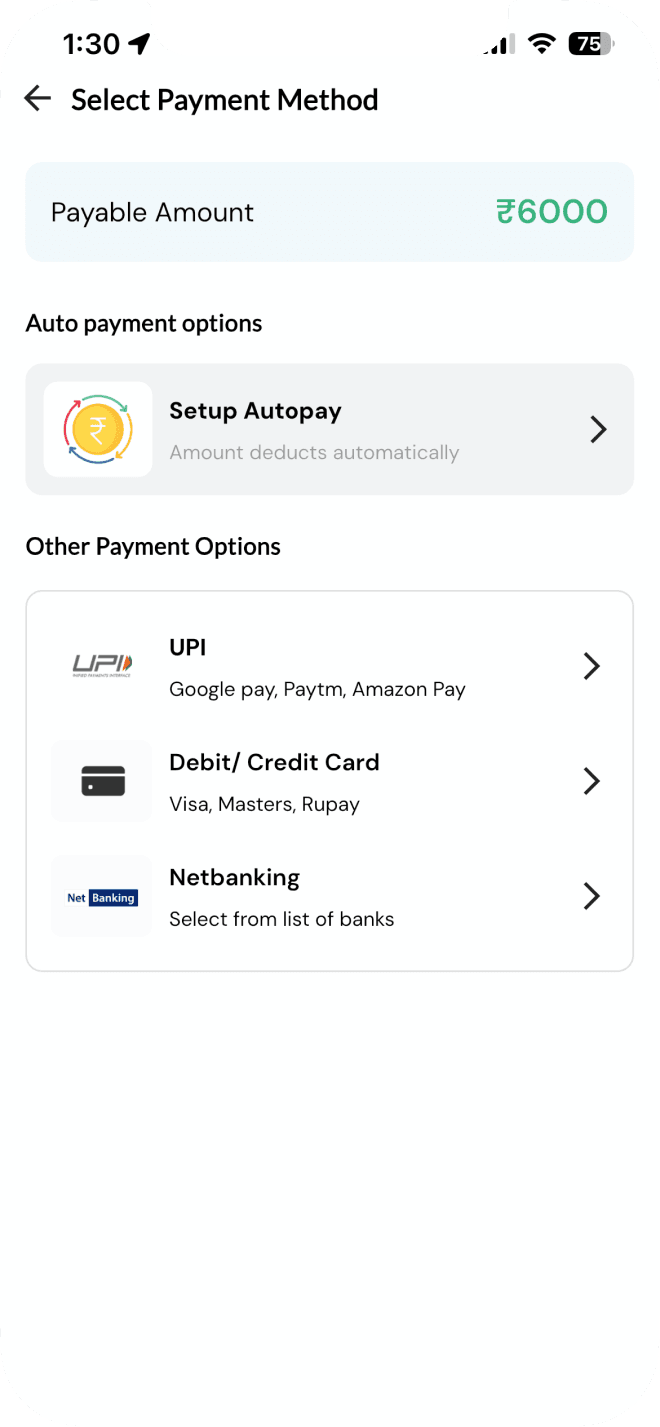
Pay instalments inside within the app.
Connect payments to live scheme records.
Reduce friction in recurring payments.
Customers could pay monthly installments directly in the app instead of visiting a store or coordinating with staff.
In-App Payments
Turn payments into a self-serve habit
Reduced dependency on staff and improved on-time payments
Notify before and around due dates.
Encourage timely monthly payments.
Reduce missed installment follow-ups.
Timely reminders helped customers stay on track and reduced the need for repetitive manual follow-ups from store teams.
Payment Reminders
From manual follow-ups to automation
~60% reduction in manual effort
Track overdue payments in one place.
Centralised customer and scheme data
Follow-up logs and activity tracking
The dashboard unified customer, scheme, and overdue payment data so store teams could act faster with less fragmentation.
Staff Dashboard
From 4+ Excel sheets to one operation view
Scheme discovery
Digital passbook
In-app payments
Payment reminders
Staff dashboard
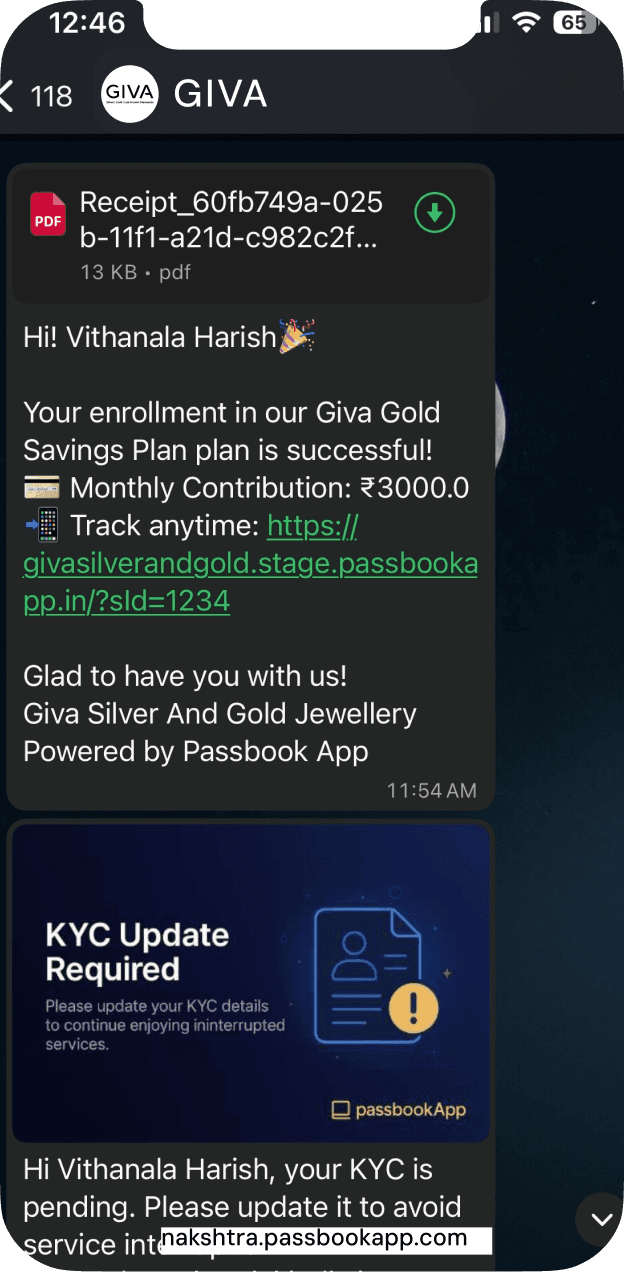
Select Plan
Store
Review
Payment
Confirm
−3 days
Gentle push + in-app
Due date
Direct push + SMS
+3 days
Push + SMS + staff flag
+7 days
Personal staff outreach
Phase 1 Outcomes
38,264
App downloads
+20%
Referral growth
−60%
Staff follow-up
<2min
Sync resolution
What didn't work after Phase 1
Paying multiple scheme was penalising best customers
Phase 1 was optimised for single-scheme payments and it worked.
But the highest-value customers, those with 3–5 active schemes, were quietly reverting to offline. Not because the app was broken. Because repeating the same flow four times was more effort than walking into the store.
What I heard from the field
“I have 4 schemes. Paying each one separately every month is exhausting.”

Customer
“Customers say it's easier to pay at the store counter than 4 times in the app.”

Store staff
“We're losing digital adoption for our best customers the ones with the most schemes.”

RBM
The Solution I built
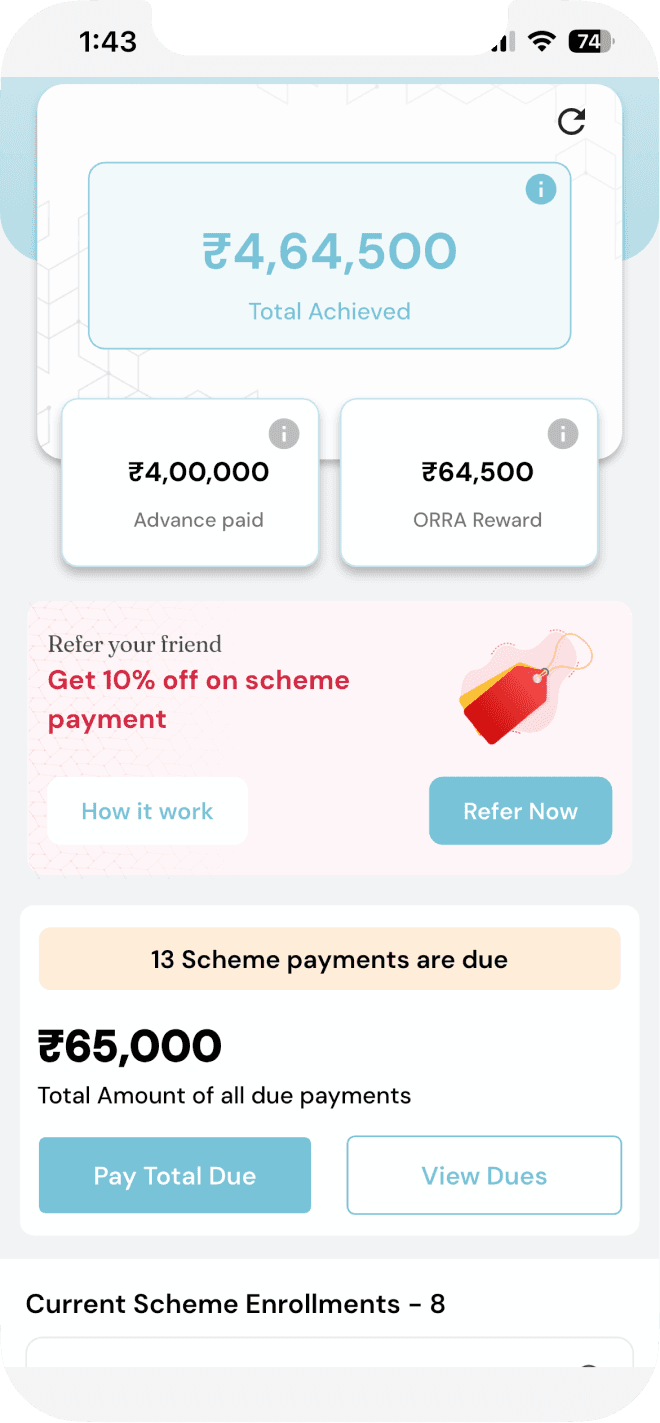
Group Payments
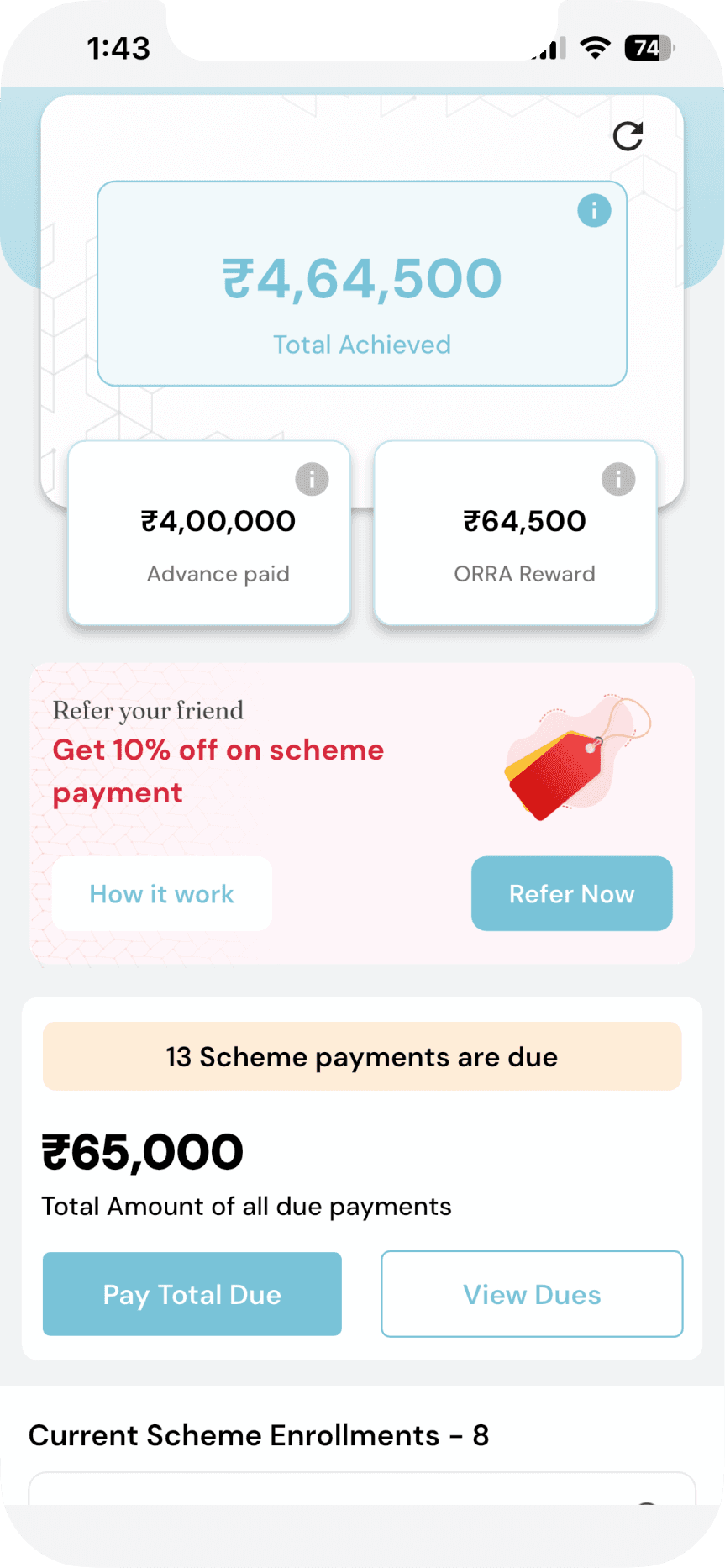
All scheme dues in one place. Review, deselect, and pay everything in a single transaction - no matter how many schemes a customer holds.
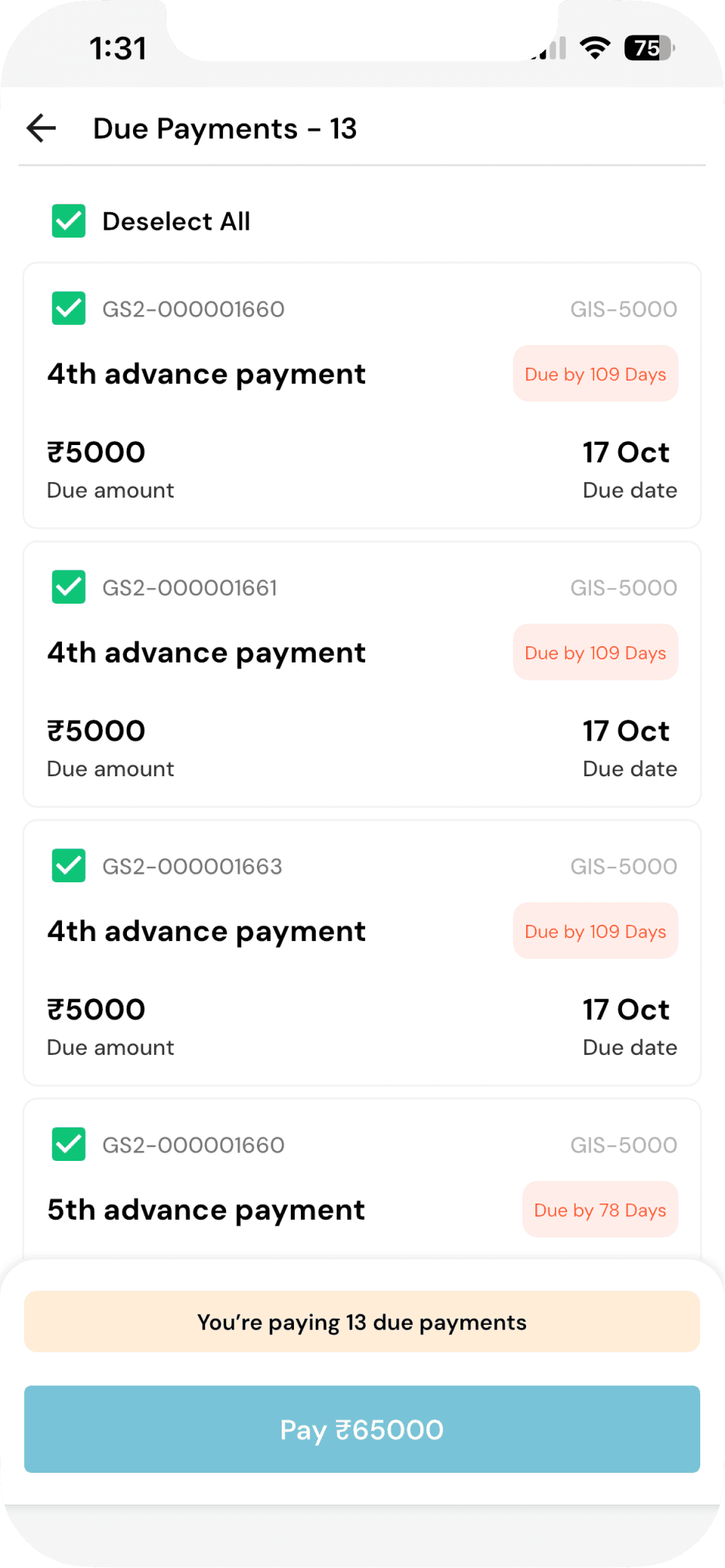
Individual scheme control
No.Due Payments in title
Due urgency badge
Total Amount on the pay button
Every payment is selectable and de-selectable. Customers stay in control of exactly what they pay in a given month.
Count shown upfront customers know what they're walking into before scrolling.
"Due in 109 days" shown in soft amber creates awareness of time sensitivity without triggering alarm.
"You're paying 14 due payments ₹65,000" updates as items are deselected.
From repeated loop to simple 4-step flow
Before - one scheme at a time
Open passbook
Open a scheme
Tap "Pay instalment"
Complete payment
Still have 3 more schemes?
Go back. Do it all again.
"This is more work than the store."
Customer drops off. Pays offline.
4 steps × N schemes
customers with 3–5 schemes reverted to offline payments
After - all schemes, one action
Open passbook
View all due payments
Review & confirm
Pay ₹65,000
"That was easy."
Done in under a minute. No repeat.
Full Control
Zero repetition.
4 steps - always
Same effort for 1 scheme or 13.
x 4 schemes
The programme launched and ran but data revealed participation was lower than expected.

The reward felt small at enrolment
The redemption felt pointless
Effort didn't match the reward
Expected
referrals/month
200-300
Reality
referrals/month
110-130
Customer research findings
I conducted user interviews with customers to understand the low engagement.
Any enrolled customer could refer a friend to enrol in either IIS or GIS, Both will receive 10% of monthly scheme value as reward points.
Refer & Earn
Launch, failure, and redesign
Version 1 - Initial Launch
Redesign
Aligning incentives with outcomes
I facilitated a workshop with the executive team and finance lead.
The business's CAC was ~₹10,000
if reward points equalled one instalment value, unit economics remained favourable and the reward felt genuinely meaningful.
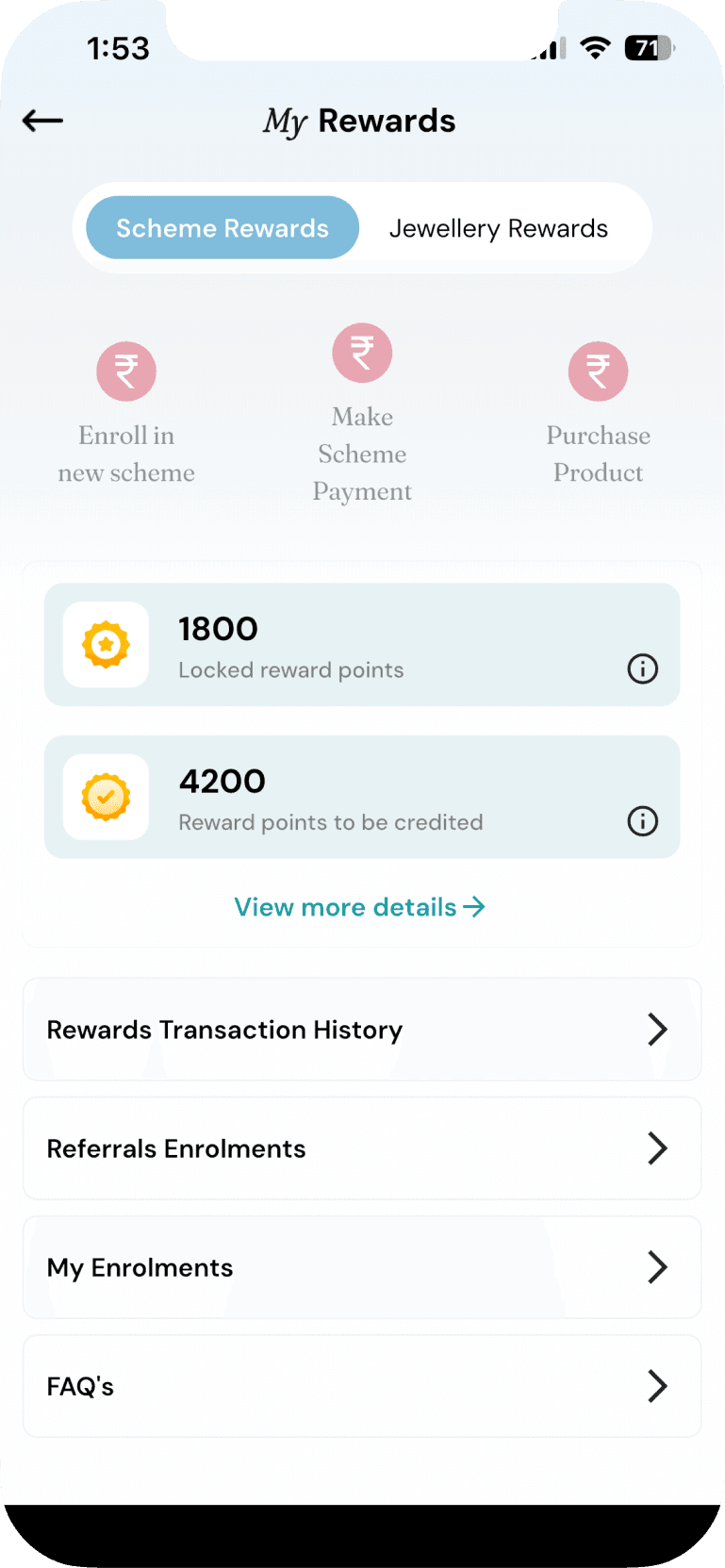
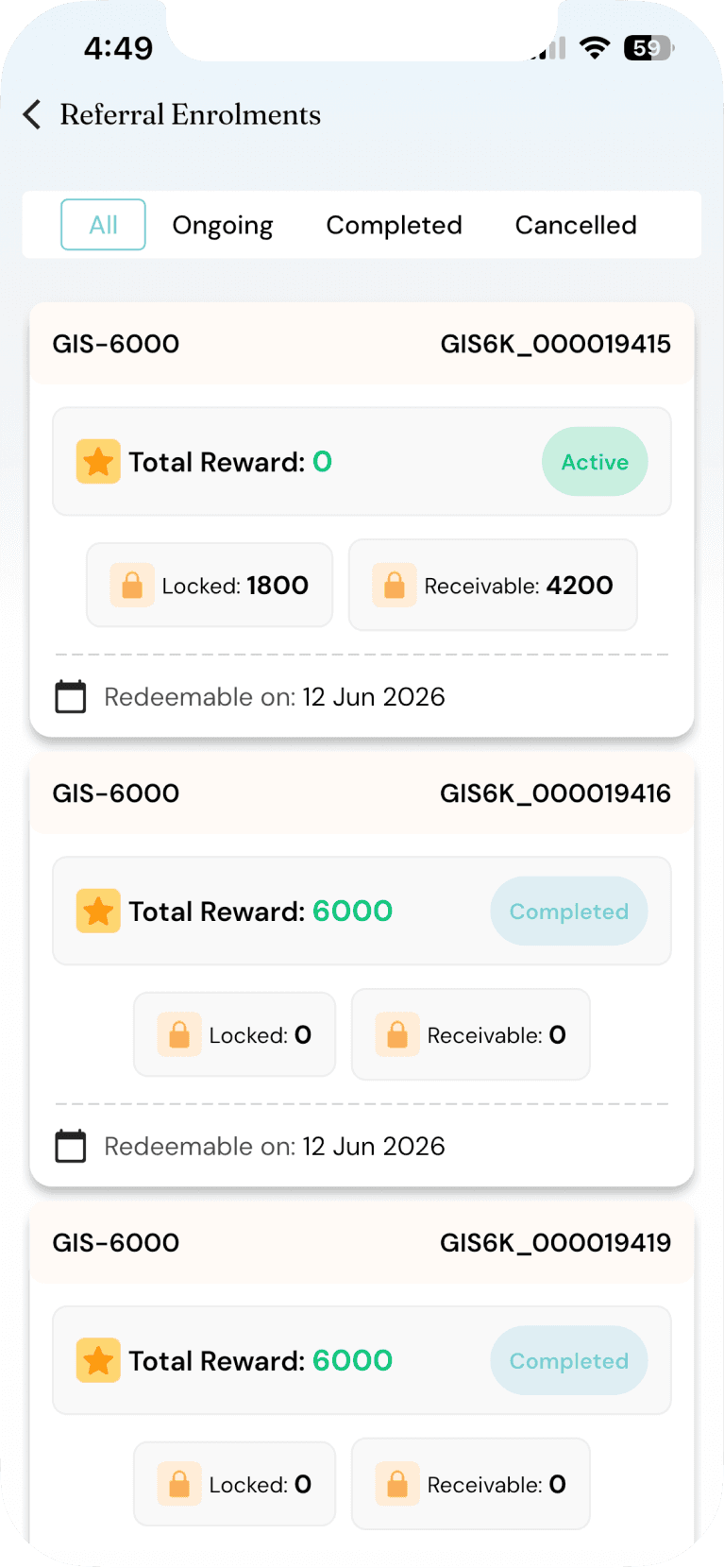
Shift from a lump sum at enrolment to monthly accrual on each successful payment. Both referrer and referee earn only when they pay.
Decision - design + business
Aligning their incentive with scheme completion, not just sign-up.
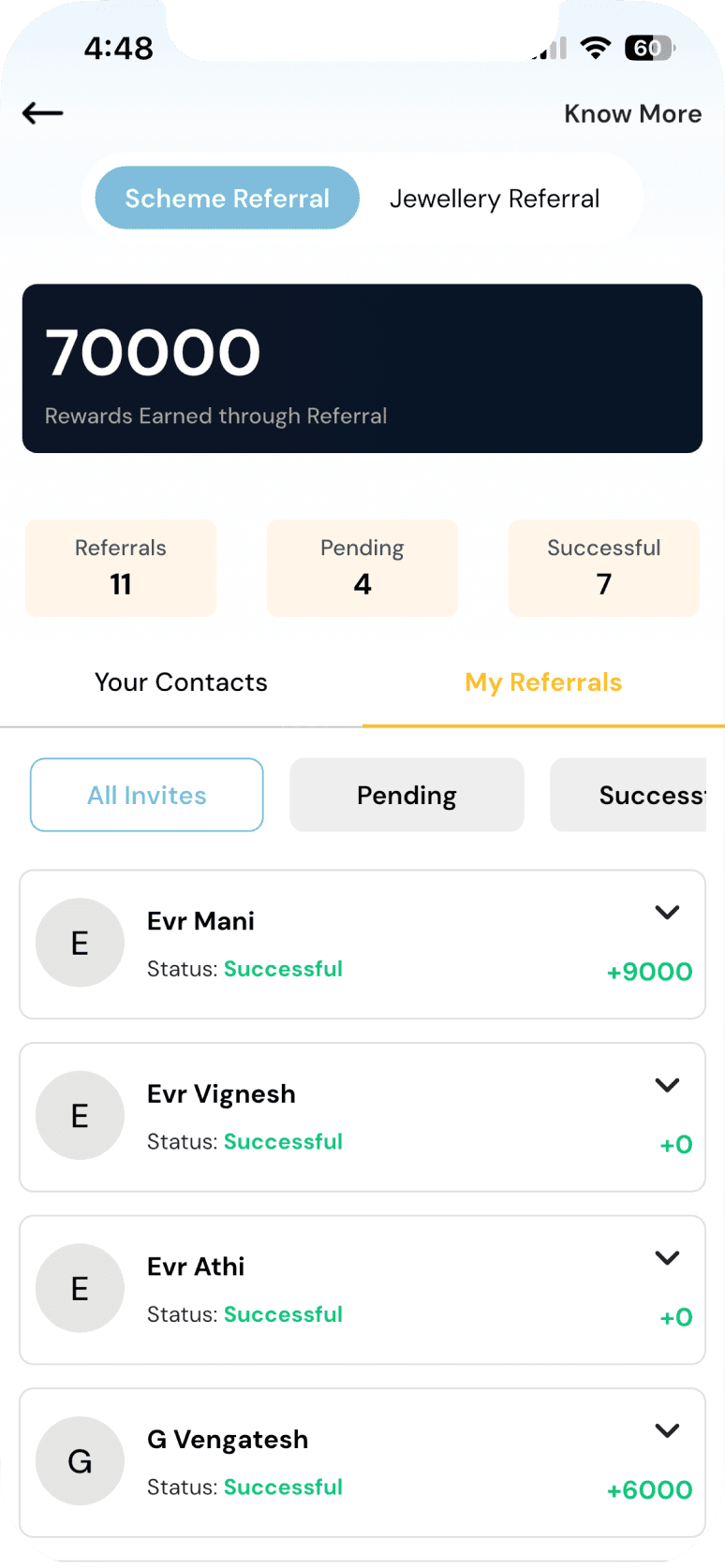
Post Redesign Outcomes
300-420
Referrals/month
3×
Referral Volume
55%
Success Rate
−10%
MOM Growth
Solution
Proactive eligibility check at the moment of intent
Customer taps "Refer Now"
Real-time scheme status check triggered
Yes, Eligible
Referral submitted
No friction added for the majority case
Seamless referral flow
GIS enrolment confirmed at tap
Clear, non-punitive message
"You don't have an active qualifying scheme"
Referral code generated
Share options presented immediately
"Enrol Now & Refer" - primary CTA
Share options presented immediately
"Refer Anyway" - secondary
Pipeline preserved · no invalid points awarded
No, Not Eligible
Eligible? System checks active GIS scheme
Impact
Dead-end became acquisition.
Enrol Now & Refer' turned a frustrated ineligible customer into a new scheme enrolment.
Support tickets dropped significantly.
Eligibility confusion nearly eliminated once the check happened at the right moment.
Reward Ineligibility
Refer CTA
Enrol Now CTA
Triggered when customer taps 'Invite' but doesn't have an active GIS scheme. Bottom sheet appears over the referral screen
'Refer' (secondary) preserves the referral pipeline business didn't want to lose the lead
Enroll Now' (primary, is the upsell converts a dead-end into a scheme acquisition moment.
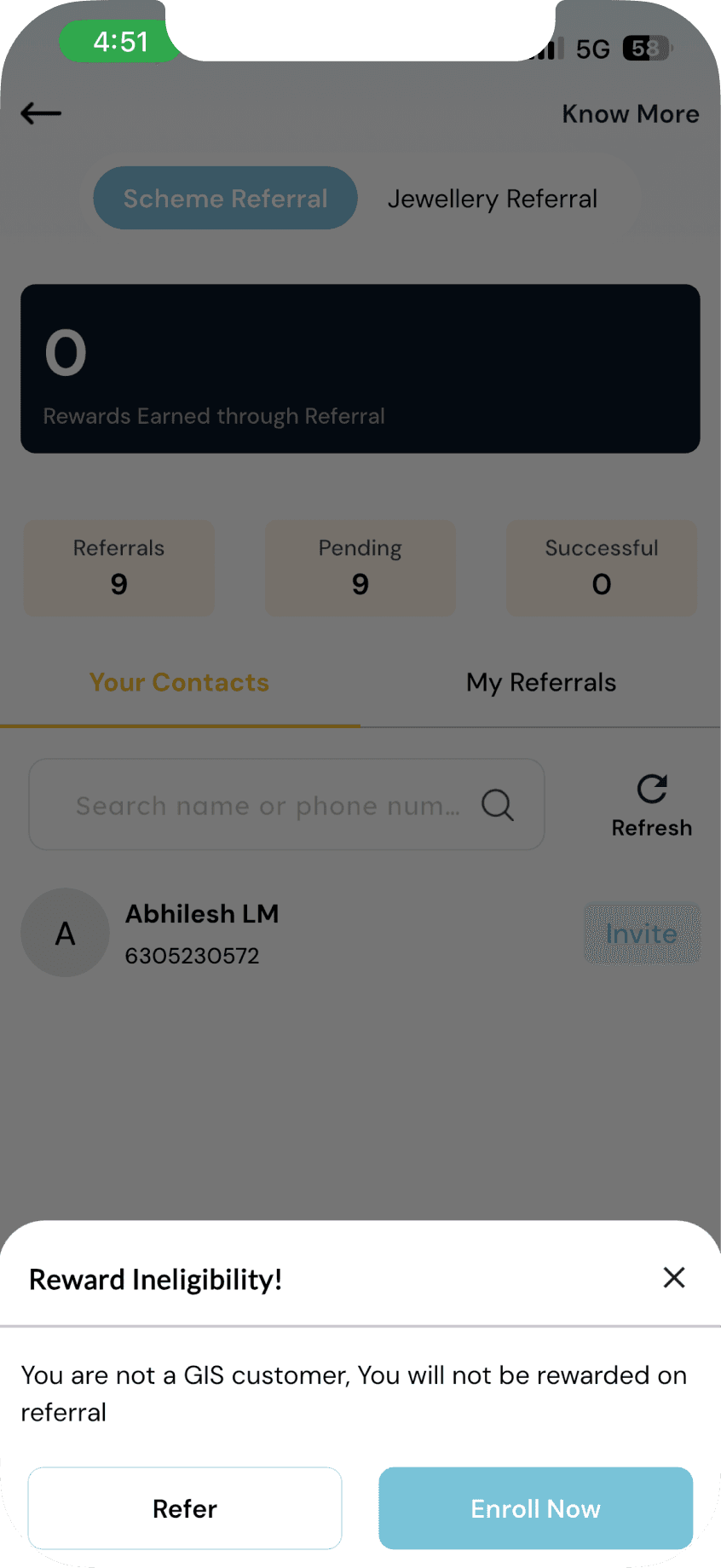
A support problem was really a design problem
After V2 launched, a recurring pattern in support tickets. Customers without an active GIS scheme were attempting referrals, then contacting staff when points didn't arrive.
Eligibility was mentioned in FAQs, Referral step by step process as well - but customers only needed that information at the moment of action, not before.
Post-launch · Edge case that became an opportunity
SUPPORT TICKETS


The MD360 data refresh tool - small feature, outsized impact
A recurring incident illustrated a broader design principle: customers with active schemes would sometimes log in and see 'no schemes.' The root cause was a data sync delay from MD360. But the customer experience was terrifying their savings appeared to have vanished.
2-3 DAYS
TIME TO RESOLVE THE ISSUE
Customer calls store, reports missing schemes
Store staff raises an IT ticket
IT assigns to engineering team
Engineering logs in, refreshes the customer's DB record
Customer is notified after closing ticket
The engineering team wasn't writing code or deploying anything. They were doing a manual DB refresh — a 30-second action. The entire 2-day cycle existed because there was no self-serve path for anyone closer to the customer.
What really happening in backend
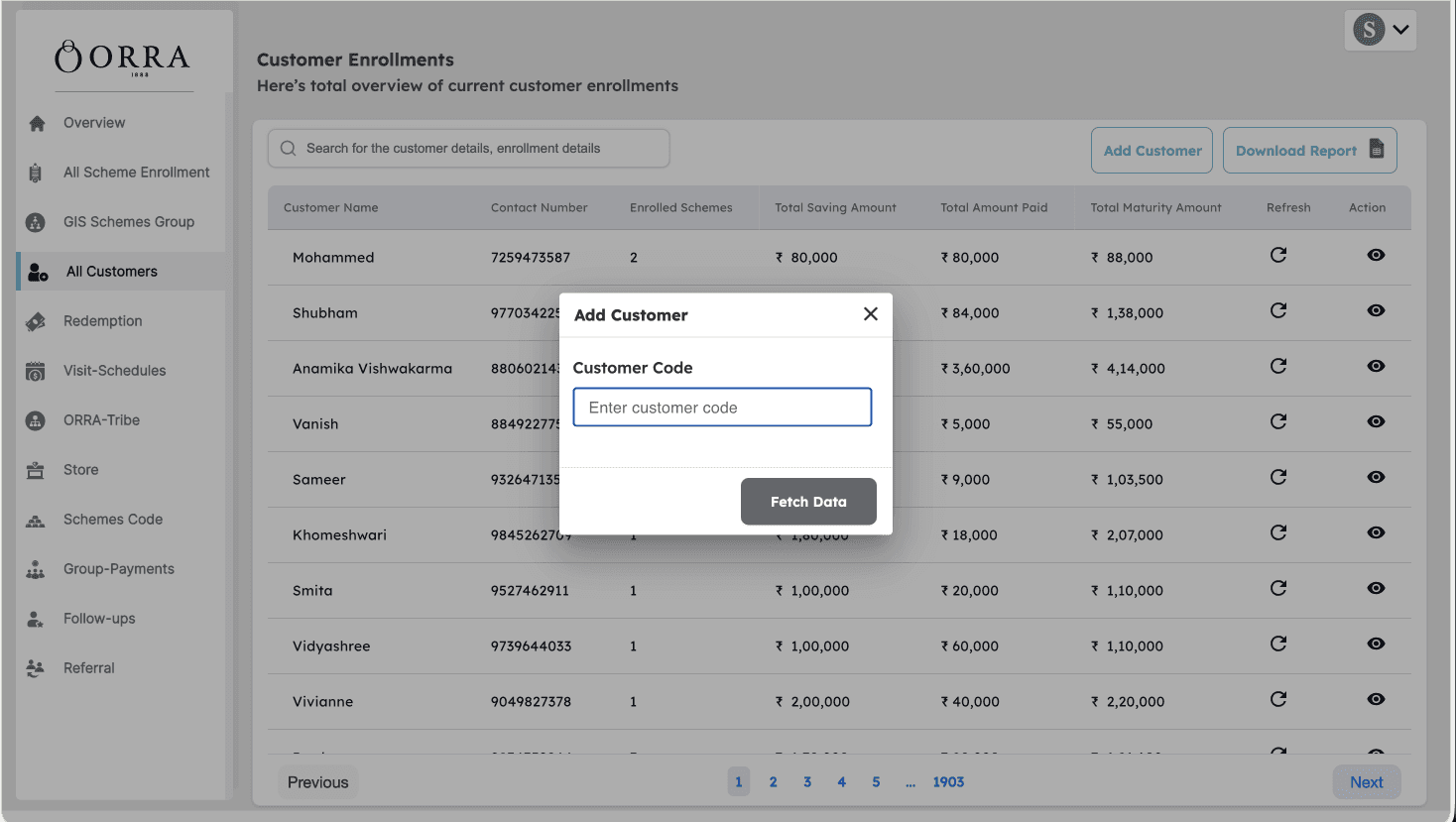
2 Mins
Resolution time dropped from 2–3 days to under 2 minutes
Design Solution
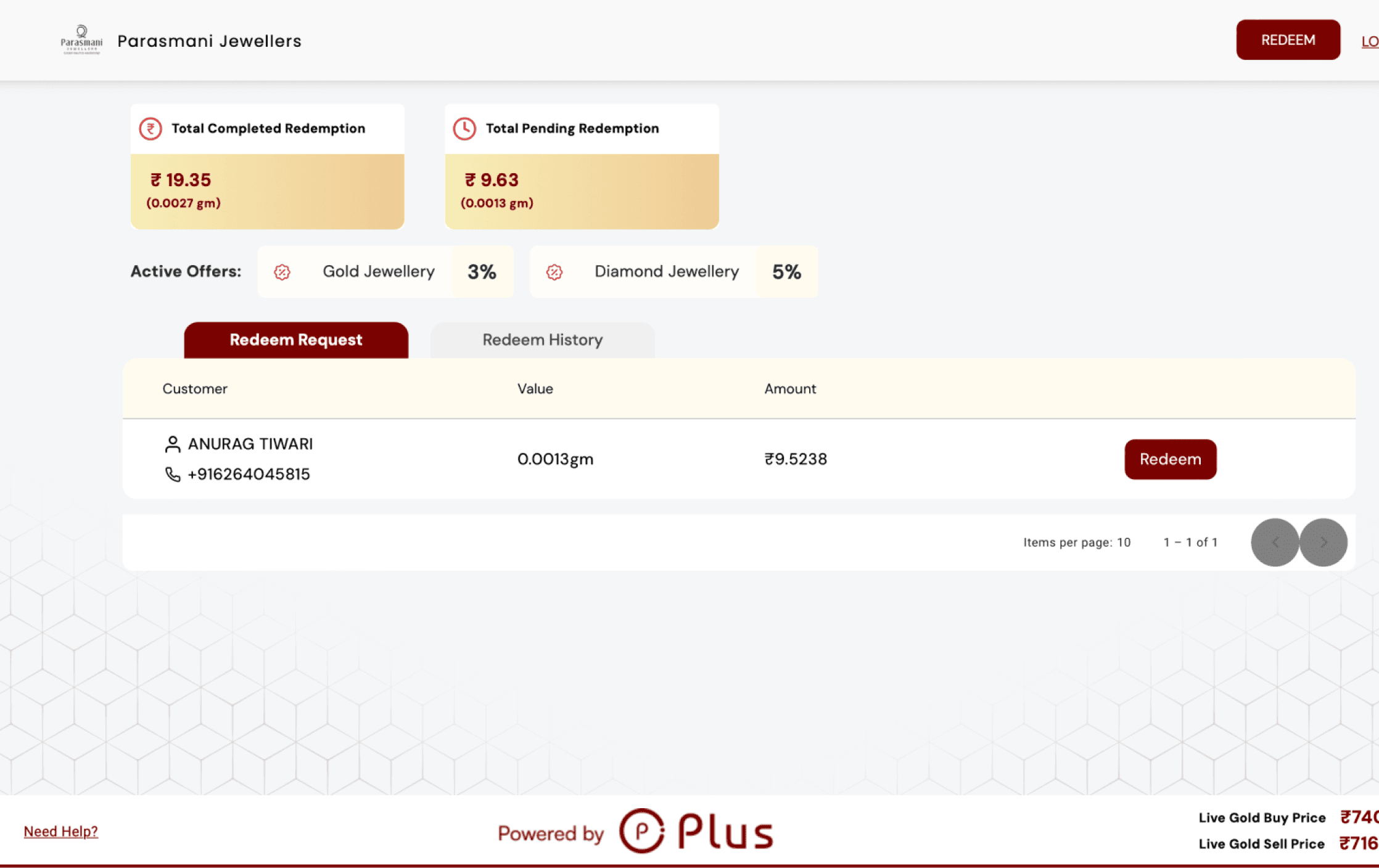
I added a 'Refresh Customer Data' utility to the staff dashboard. Staff search by mobile number, tap refresh, and the MD360 sync triggers immediately.
Key learning:
Not every problem needs code. Sometimes the right design removes the need for engineering.
Feature 8
INTERNAL TOOL
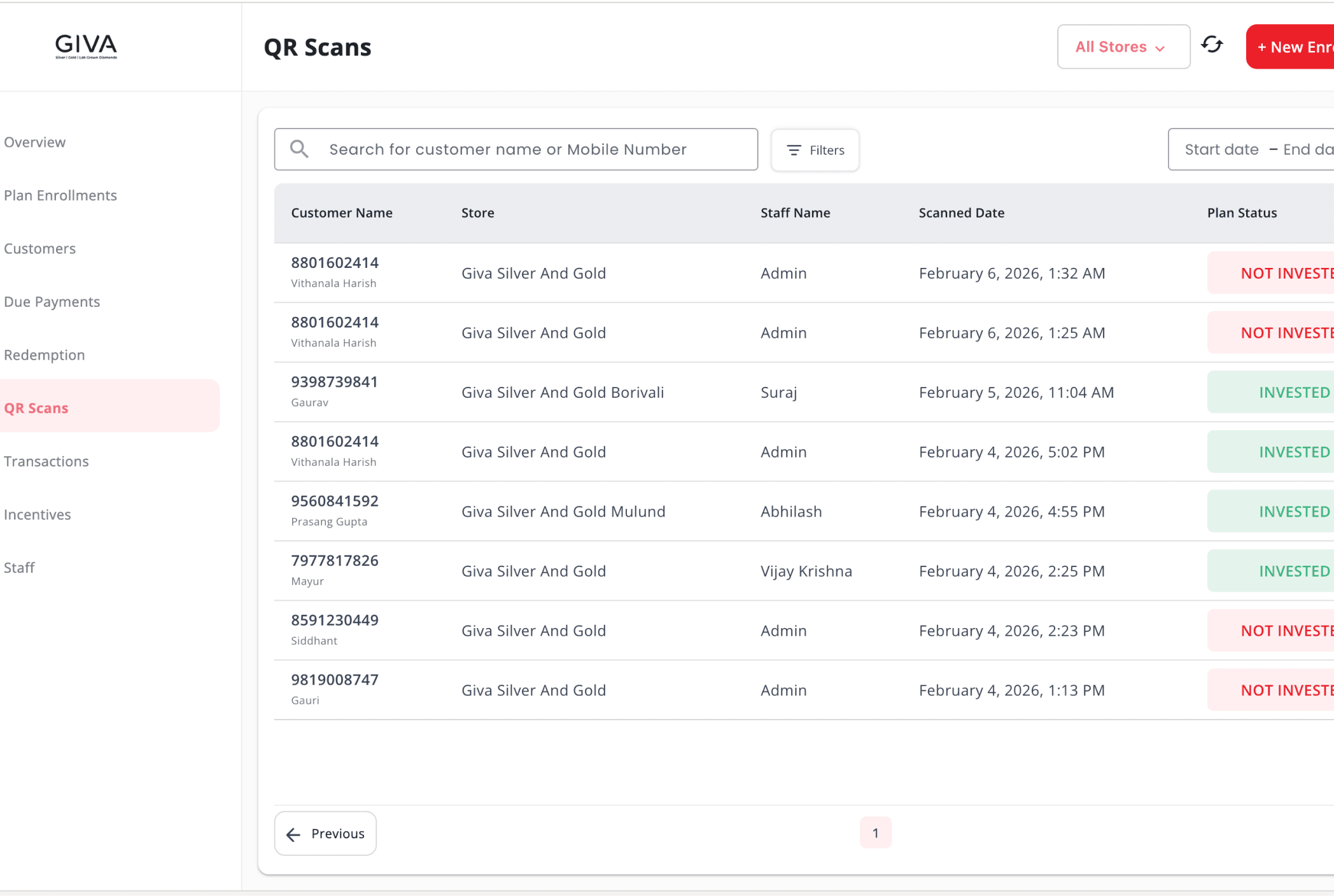
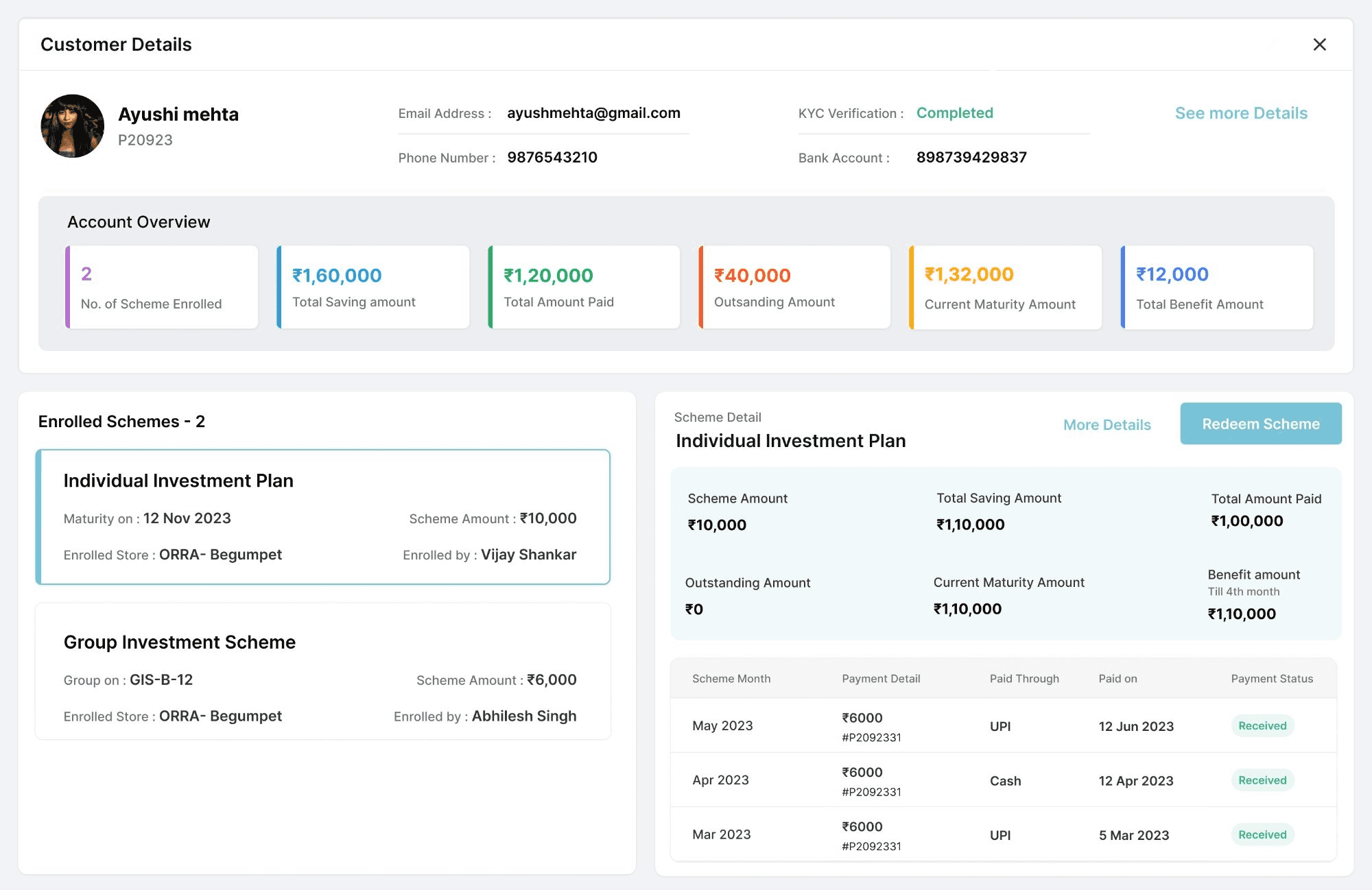
Staff Dashboard - the operational backbone
Follow-ups
Enrolments
Referrals
Group Payments
A recurring incident illustrated a broader design principle: customers with active schemes would sometimes log in and see 'no schemes
Follow - ups
Enroll Now' (primary, is the upsell converts a dead-end into a scheme acquisition moment.
Enrol Now CTA
Enroll Now' (primary, is the upsell converts a dead-end into a scheme acquisition moment.
Enroll Now' (primary, is the upsell converts a dead-end into a scheme acquisition moment.
₹7Cr+
Monthly digital collections up from near zero at launch
38,264
App downloads
-60%
Staff follow-up
87%
Fewer support tickets 12–15 per week down to 1–2
+20%
Referral growth
<2min
Sync Resolution
Measured outcomes
IMPACT
Learnings
What this project reinforced
01
Behaviour over features
The most impactful decisions weren't about adding features they were about supporting specific behaviours that drove outcomes: on-time payments, scheme completion, referral activation.
02
Internal tooling deserves the same design rigour
The staff dashboard drove 60% reduction in follow-up effort. The people who serve customers are part of the experience system their tools define the customer experience too.
03
Small operational UX changes create outsized impact
The MD360 data refresh tool eliminated a multi-day escalation chain. Not every problem needs a code release. Giving staff a simple self-serve action freed engineers for higher-value work and rebuilt customer trust in real time.
04
Decisions are collaborative, not solo
Feature sequencing, reward structure, and roadmap prioritisation were outcomes of conversations with executives, finance, operations, and store staff. The designer's role was synthesising those inputs into the right design expression.
"This project reshaped how I approach design - not as building interfaces, but as designing systems that influence behaviour, reduce operational complexity, and directly impact revenue at scale."